Golfer’s Elbow, or middle epicondylitis, happens when you use your elbow too much and strain the tendons that connect to the inside of it.
As an avid golfer, the repetitive golf swing can take its toll on the elbow joint. It further leads to inflammation and pain.
Shockwave therapy is the most famous and effective non-invasive treatment in relieving golfer’s elbow. It eases pain, speeds up healing, improves blood circulation, and encourages collagen production in the affected area. This therapy provides relief within the initial couple of days. However, doctors may recommend 24-72 hours of restricted activity to cure the area completely.
This blog post will discuss how shockwave treatment for golfers’ elbows works and what to expect.
Continue reading to discover how this treatment can restore your golfing form.
What is Shockwave Therapy?
Extracorporeal shockwave therapy does not require invasive procedures. Web MD states that it employs high-energy sound vibrations to disrupt scar tissue and promote healing.
The therapy utilizes extracorporeal shockwaves that penetrate the tissue. It sets off a healing reaction, which lowers inflammation and helps new blood vessels grow.
Shockwave therapy is classified into two categories that are commonly employed in treatment:
Focused shockwave therapy: More precise shockwaves targeted at a specific area.
Radial shock wave therapy: Shockwaves spread in a radial pattern over a larger area.
Both have shown effectiveness for chronic injuries like golfer’s elbow.
How Shockwave Therapy Can Help Relieve Golfer's Elbow
Shockwave therapy ESWT is the most famous and efficacious way to treat a golfer’s elbow. Several studies have shown that radiation shockwave therapy improves function in patients with chronic golfer’s elbow.
Chiropractors administer the treatment to the afflicted elbow region using a handheld instrument. It helps with,
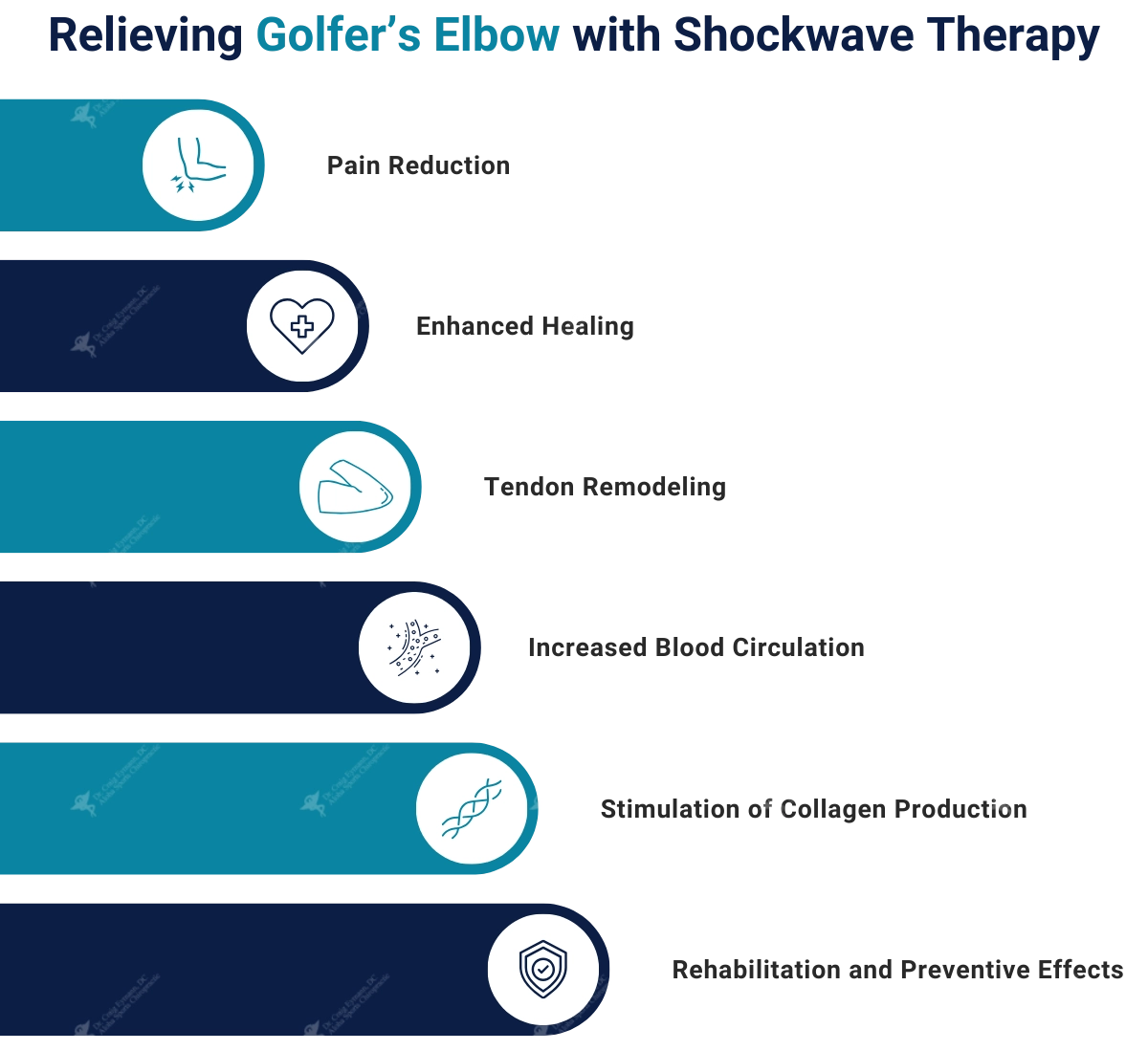
1. Pain Reduction
Shockwave therapy is an excellent treatment for the pain associated with the Golfer’s Elbow. This treatment stimulates the release of natural pain-relieving molecules within the body by targeting the wounded tendons. Consequently, patients frequently encounter substantial reduction of discomfort.
2. Enhanced Healing
Shockwave therapy’s mechanical force is critical to speeding up the healing process. This treatment increases circulation and metabolic rate in the afflicted area. It creates an optimal environment for enhanced healing. The increased circulation helps get essential nutrients to the hurt regions faster, which speeds up the healing process.
3. Tendon Remodeling
Shockwave therapy for Golfer’s Elbow subjects controlled tiny wounds to the afflicted tendons. It triggers a healing response that goes beyond mere pain relief.
This process promotes the remodeling of damaged tissue. It also enhances the overall strength and resilience of the affected area. The tendons feel better and get better over time, which helps them heal and lessens the pain.
4. Increased Blood Circulation
An advantageous characteristic of shockwave therapy is its potential to enhance blood circulation to the site of concern. Better blood flow makes it easier for oxygen and nutrients to get to the hurt muscles. It creates an atmosphere that helps people heal and get better faster.
5. Stimulation of Collagen Production
Shockwave therapy stimulates the manufacture of collagen – an essential part of healthy tendons and connective tissues. Collagen is vital for keeping tendons strong. This treatment makes the body produce more collagen, which helps the wound heal and strengthen.
6. Rehabilitation and Preventive Effects
Shockwave therapy can also help with recovery and keep injuries from happening. This therapy prevents future problems and supports long-term joint health. Shockwave therapy does this by removing the causes of golfer’s elbow and promoting the regeneration of soft tissues.
Chiropractors consider shockwave therapy safe with minimal side effects. There are no hazards involved, unlike those linked to medications or surgery.
Pain, swelling, or bruises on the arm that aren’t too bad for most people go away quickly after treatment.
Efficacy of Shockwave Wave Therapy for Golfer Elbow
Research studies indicate that shockwave therapy reduces pain and promotes function with a success rate of over 70%. It provides notable advantages for individuals who suffer from chronic golfer’s elbow. The effects are cumulative, with ongoing improvements over 3-6 months.
Shockwave Therapy Over Other Treatments
Shockwave therapy is better than cortisone injections and other treatments. It has long-lasting benefits and no risk of complications. The treatment is non-intrusive and requires little to no recuperation time.
Uncertainties
Pain Reduction: Some studies show a significant drop in pain, while others show no change compared to groups that were given a fake. It implies that various individuals might experience divergent responses.
Long Term Effects: The lasting impacts of shockwave therapy on golfers’ elbows are uncertain. There isn’t much study accessible above three months.
Shockwave treatment works exceptionally well for people who have had symptoms for more than six months. It provides hope to individuals not getting better with relaxation, exercise, or medicine.
The actual shockwave therapy procedure is straightforward and non-invasive. Chiropractors perform it manually, so it requires no sedation. Here’s how,
A worker put a gel on the treatment area while you sit down with your elbow supported.
The chiropractor then positions the shockwave applicator against the area and administers a series of high-energy pulses.
Most patients define it as a sensation like a woodpecker pounding tightly on the skin.
Most shockwave treatment sessions last between 5 and 10 minutes. However, specific sessions may be as brief as 5 minutes or as lengthy as 20 minutes.
Most patients need 3-5 treatments spaced 1-2 weeks apart.
You can resume your normal activities immediately after treatment.
There are potential adverse reactions to consider, as with any medical procedure. These may include,
Mild discomfort, edema, or soreness at the therapy site.
Temporary numbness or tingling
Headaches
These side effects typically resolve within a day or two. More severe risks like nerve damage or tissue tears are highly uncommon. Shockwave treatment is thought to be very safe overall.
Who Should Consider Shockwave Therapy?
Shockwave treatment may suit people with persistent Golfer’s Elbow for over three months. Some good candidates are:
Those still experiencing elbow pain and soreness despite rest, NSAIDs, physical therapy, etc.
Golfers, tennis players, rowers dealing with overuse injuries.
Patients preparing to undergo elbow surgery who want to try a more conservative option first.
You are a good candidate as long as there isn’t any open infection in the affected area. However, it would help to speak with a doctor before any shock wave treatment.
Those with elbow implants, heart conditions, or a pacemaker should avoid shockwave therapy due to risks. Pregnant women should also refrain from treatment.
Recovery and Aftercare of Shockwave Therapy for Golfer Elbow
Following the doctor’s instructions after shockwave treatment is essential to get better and stay healthy. Here’s a comprehensive guide:
1. Rest and Activity
Rest: Depending on your situation, you may need to rest the area for 24 to 72 hours after treatment. Avoid everyday activities that aggravate your elbow, such as lifting, gripping, and swinging motions.
Light activity: You should do light exercises or stroll to improve blood flow and keep you from getting stiff. However, refrain from strenuous exercise for at least 24 hours.
2. Pain Management
You might feel some tenderness or unease following treatment. If needed, you can have painkillers like acetaminophen (paracetamol). Aspirin and ibuprofen are examples of drugs that combat inflammation should be avoided because they can delay healing.
3. Rehabilitation Exercises
Your chiropractor will devise exercises to fortify and stretch the tissues around your elbow. These exercises should be done regularly and slowly to get the most out of shockwave treatment.
4. Additional Tips
Maintain good posture to avoid putting strain on your elbow.
Apply heat therapy (hot water bottle or heating pad) to the treated area after 48 hours if necessary.
Eat a nutritious meal rich in fruits, whole grains, and vegetables.
Stay hydrated by drinking lots of water.
Allows your body to rest by getting sufficient sleep.
5. Expected Recovery Time of Golfer Elbow with Shockwave Therapy
Most individuals experience pain relief and improved function within 4-6 weeks of shockwave therapy. However, the exact recovery time will vary based on the extent of the sickness and the individual’s response to treatment.
6. Things to Avoid
Avoid strenuous activities that aggravate your elbow.
Avoid ice massage or direct massage on the treated area.
Avoid direct message or manipulation of the treated area for a few days.
Smoking and heavy alcohol usage should be avoided since it can hinder healing.
Avoid Anti-inflammatory drugs like aspirin or ibuprofen.
Struggling with Golfer's Elbow? Shockwave therapy is Your Ticket Back to Relief
We Offer Top Shockwave Therapy. Call us Today at (831) 325-9286 for Your Free Consultation!
Shockwave therapy is a successful, non-invasive option for golfers who haven’t worked with other treatments. Clinical studies support its safety and efficacy. Shockwave treatment has a high success rate and few side effects.
It can hasten recovery and relieve discomfort in the elbow that has persisted for years or months. Most people report significant improvements in pain, flexibility in motion, and ability to grip. It also improves overall functionality after three to six targeted treatment sessions.